Taxidermy Restoration, Repair & Collection Care
Most of the mounts we are asked to restore came from a grandfather’s basement, a lodge that changed hands, or a house fire that mostly missed the trophy room. They are usually dusty, often faded, sometimes cracked around the eyes and nose, and almost always worth saving. We restore mounts we did not build, and we will tell you plainly when one is not worth it.
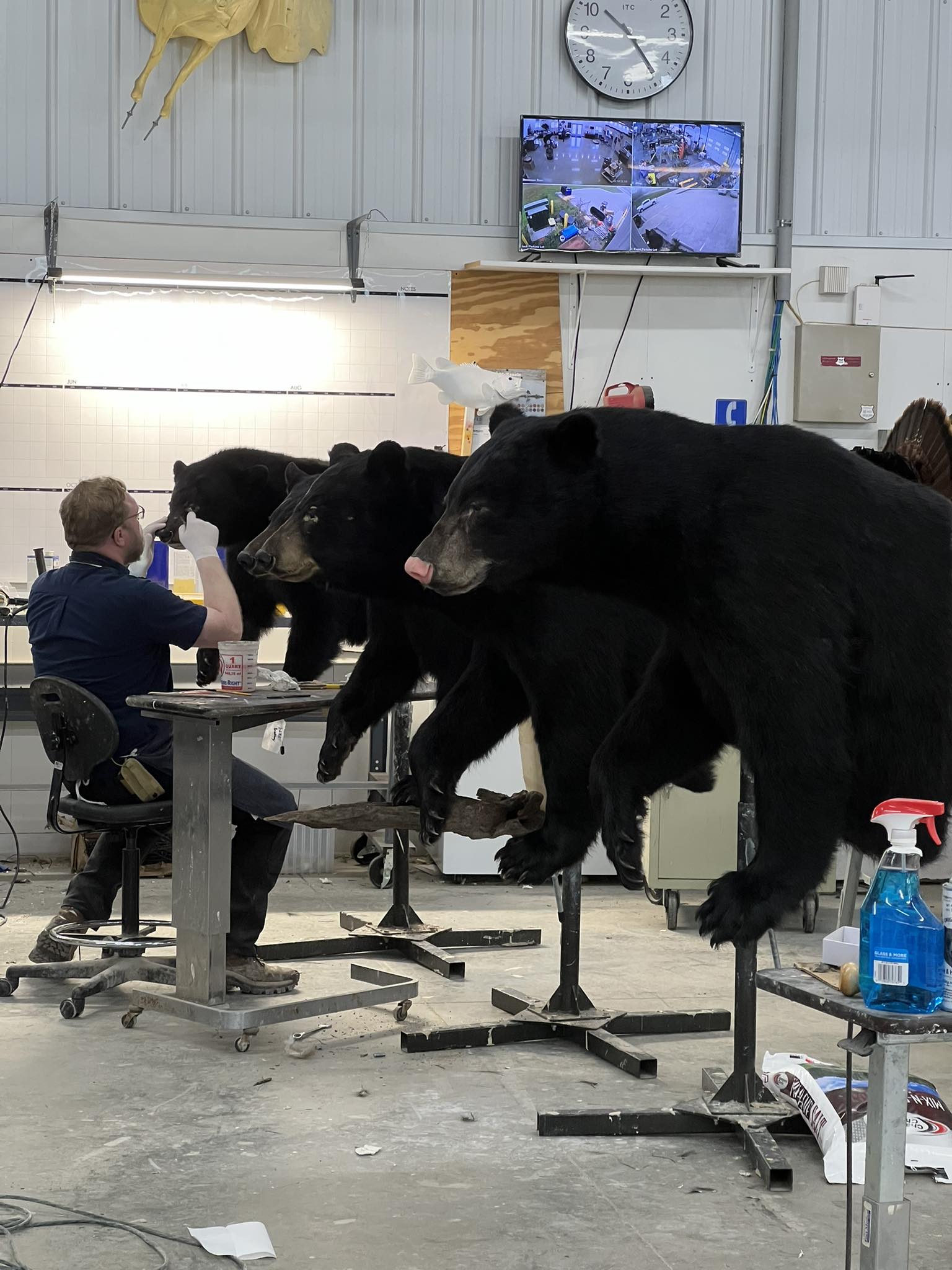
We have built mounts since 1978, so we know how they were built in 1965
A mount that has hung for forty years has a history: the way the cape was preserved, the form underneath, the paint that was available, the room it lived in. Knowing how each generation of taxidermy was put together is what lets us tell you what has gone wrong with yours, what can be fixed, and what it will take. Restoration work is done in our Jefferson, Wisconsin studio under Aaron and Austin Stehling, and it starts with photographs.
What we can repair
Cleaning and grooming
- Deep cleaning and dust removal
- Hair and feather grooming and resetting
- Smoke, soot, and water damage cleanup
Faces and finish work
- Repainting faded noses, eyes, lips, and gill plates
- Cracked or shrunken nose, lip, and eye repair
- Ear repair and reshaping
Antlers, horns, and fins
- Antler and horn repair, reattachment, and refinishing
- Fish fin repair and repainting
- Moving antlers, horns, skulls, or fins to a new mount
Bases and structure
- Loose or failing panel and base repair
- Habitat and groundwork repair or replacement
- Structural stabilization on old mounts
- Reworking an outdated mount onto a new base or pedestal
Fixing a mount from another shop
A good share of the repair work on our bench is on mounts other studios built. The usual problems are a dry-preserved cape that cracked and shrank around the eyes, a nose that faded to gray, ears that drummed away from the form, hair slipping along a seam, or an antler set that came loose. Bring it in or send photos and we will tell you plainly whether it can be fixed, what it will cost, and whether it is worth it. Nobody is going to lecture you about where you took it the first time; we would rather you end up with a mount you are proud of.
Collection care
Beyond single-mount repair, we can look at a collection as a whole: a condition assessment across every piece, cleaning and dusting, checking for pest activity, minor repairs, habitat and base touch-up, and documenting what is in the collection and its condition. If you have inherited a room full of mounts, or you manage a lodge or commercial space with wildlife displays, ask us about collection-care options. Planning a room around the collection once it is back in shape? See Trophy Room Design.
Older mounts need looking at before anything else
This matters, so we will say it plainly. Taxidermy from earlier decades was often preserved with chemicals that are no longer used, including arsenic-based compounds. Older mounts may also carry pest infestations that are not visible from across a room.
We evaluate every older specimen before we commit to a plan. Sometimes that changes what is advisable, and occasionally it means a piece is not safe to work on. We would rather tell you that up front than discover it halfway through. If you have an old mount you are unsure about, send photos before you move it around much.
Is it worth restoring?
Sometimes the honest answer is no. A badly deteriorated mount can cost more to bring back than to replace, if the animal can be replaced at all. But most of what we see is worth doing, and the ones that cannot be replaced, like a species you can no longer legally take or a mount with family history behind it, are worth doing almost regardless. Send photographs and we will give you a straight answer.
Restore it, or remount it?
Restore
If the hide is sound, with no slipping and no cracking that goes through the skin, and the problem is finish work, paint, dust, or the base, restore it. That is most of what comes through the door.
Remount
If the cape was dry-preserved and is failing in several places, or the form underneath is the wrong species or badly out of proportion, a new mount from a new cape is usually the better use of the money, and we will say so.
Keep the parts
Antlers, horns, skulls, fins, and feathers can almost always be saved and moved to a new mount, so the trophy itself carries over even when the old cape does not.
Older mounts often need looking at in person. A condition assessment on a single piece is quick and free at either location. See our Service Promise for how we quote and stand behind the work.
Photo checklist for a restoration quote
We quote restoration from photographs rather than publishing a rate, because the cost depends entirely on the damage and the species. Good pictures get you an accurate answer faster. Send:
- The whole mount from the front, in daylight or good room light, no flash if you can avoid it
- Both sides and the back, including the hanger, panel, or base
- Close-ups of every problem area: eyes, nose, lips, ears, seams, cracks, loose antlers, bare or slipping hair, chipped fins
- Any labels, dates, or shop names on the back of the panel or base
- Signs of pests or damage: dust piles, shed hair, holes, webbing, smoke or water staining
- What you know about its history: roughly when it was mounted, where it has been stored, and what you want it to become
Bugs coming out of a mount? Isolate it from the rest of your collection and contact us. Pest activity spreads, and the sooner it is addressed the less you lose.
From photos to a finished piece
- Send photos and the story. Use the contact form, or text them to us. We will tell you what is possible and whether it is worth doing.
- We look at it in person when needed. Older and larger pieces often need a hands-on look. Bring it to Jefferson or our New Franken showroom, or talk to us before packing one to ship. Old mounts are fragile. See Shipping to Us.
- You get a written quote and a plan. Restore, remount, or leave it alone, with the cost of each option where more than one makes sense.
- The work is done in our Jefferson studio. Restoration is scheduled alongside our production work; see the pricing page for current turnaround expectations and ask us about your specific project.
Museums, nature centers, and institutional collections
Larger exhibit and diorama restoration is handled by our sister company, Epic Journey Designs. You can also see our museum and institutional work.
Common questions
Can you restore a mount another taxidermist built?
Yes. Much of the restoration work we do is on mounts we did not build.
How old is too old?
Age itself is not the barrier; condition and preservation chemistry are. We have worked on mounts many decades old. Send photos and we will assess it.
What does restoration cost?
It depends entirely on the damage and the species, so we quote from photographs rather than publishing a rate. Send several pictures, including close-ups of the damage.
How long does restoration take?
Restoration is scheduled alongside our production work. See the pricing page for current turnaround expectations, and ask us about your specific project.
My mount smells like smoke.
Send photos and describe the exposure. Smoke and soot damage is often recoverable.
Do I have to bring it in, or can I ship it?
Both work. Old mounts are fragile, so talk to us before packing one. See Shipping to Us.
Can you update an old mount to a modern base?
Often, yes. Remounting an older piece onto a pedestal or custom habitat is one of the more satisfying things we do. See Custom Taxidermy Habitats.
Request a restoration evaluation.
Send photos of the mount, including close-ups of the damage, and tell us what you know about its history. We will tell you what is possible and whether it is worth doing.