
Expert Antelope Taxidermy in Wisconsin
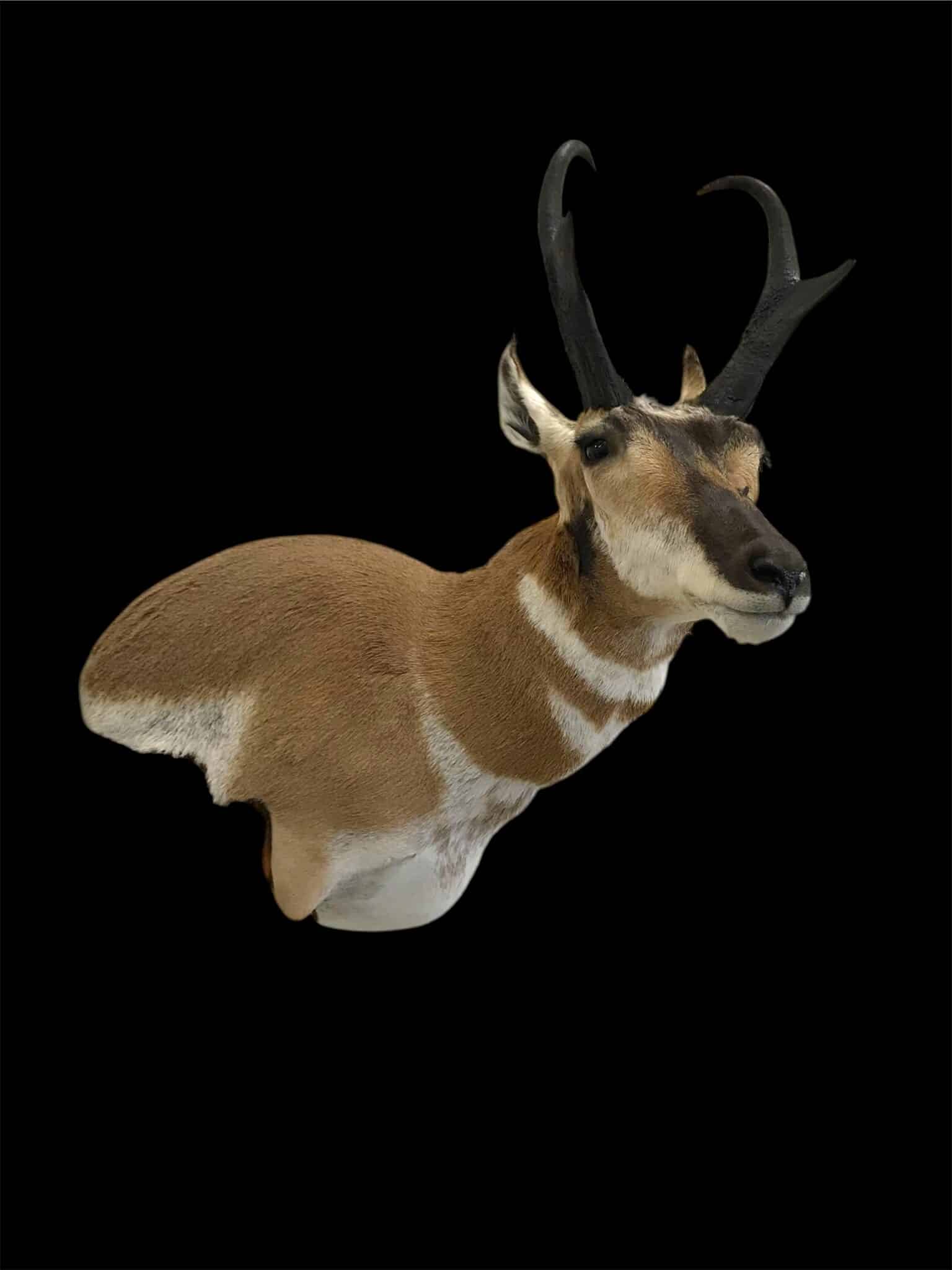
A pronghorn antelope is one of the most striking trophies in North America – jet-black cutters, a cinnamon-and-white cape, and hair so hollow and fragile that it demands a taxidermist who knows exactly how to handle it. Since 1978, Stehling’s Taxidermy has mounted pronghorn for hunters coming home from Wyoming, Montana, the Dakotas, Nevada, and New Mexico. Whether it is your first speed goat or the buck that finally broke 80 inches, we build lifelike antelope shoulder mounts, pedestal mounts, and life-size displays that hold up for generations.
Antelope Mount Options
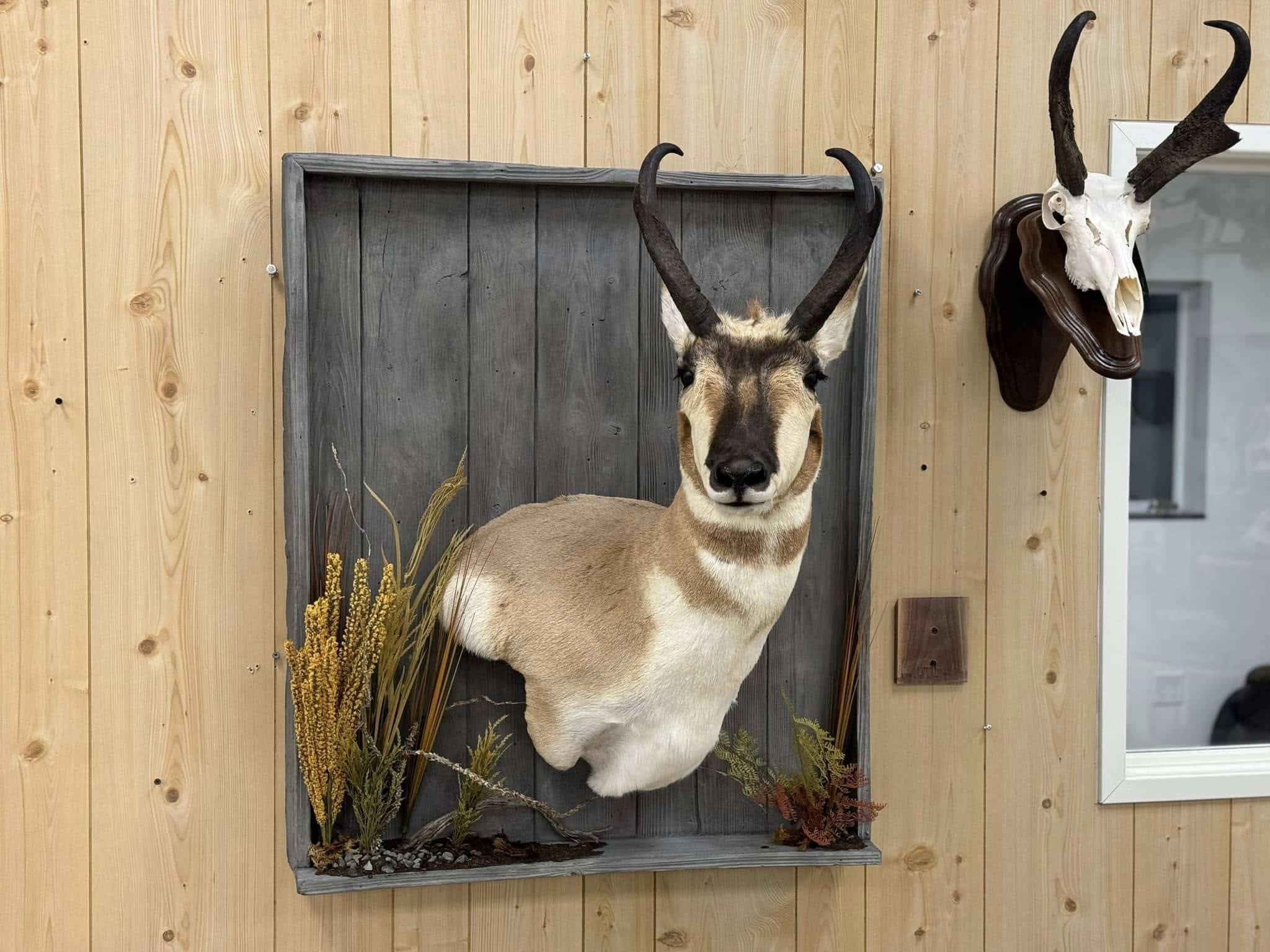
Pronghorn are beautiful as upright or turned-head shoulder mounts, and they are one of the best species for a pedestal mount – the white throat patches, cheek patch, and mane read from every angle when the mount is out in the room. We also build half-body and full-body life-size antelope, often on a sagebrush or prairie habitat base that puts the animal back in the country you hunted. Combination pedestals that pair an antelope with a mule deer from the same western trip are a favorite for hunters who want one display instead of two. We will help you choose the pose, the base, and the horn presentation so the finished mount fits your room and tells your story.
Planning the display
- Wall, pedestal or shadow box. A shoulder mount uses the least wall space. A pedestal shows the white throat patches and mane from the side, and a shadow box frames a shoulder mount on the wall.
- Horn height. Pronghorn horns stand tall above a narrow head, so check the height of the spot you have in mind, especially above doorways or on low walls.
- One western display. A combination pedestal with a mule deer from the same trip is quoted as one project; see the photo on this page.
- Room placement. Send us the wall measurements and a photo of the room, and we’ll recommend a pose and turn.
Antelope Mount Gallery
Real pronghorn mounts from our Jefferson studio. Click any photo to see it full size.


Ready to get your pronghorn mounted?
Tell us about your trophy and we will help you choose the pose, the base and the horn presentation. Drop off at either Wisconsin location, or call us and then ship your frozen cape and horns to Jefferson.

Mule Deer & Antelope Combination Pedestal Mount – Stehling’s Taxidermy
Field Care: Protecting Your Antelope Before It Reaches Us
Antelope are the least forgiving cape in North American big game, and most pronghorn seasons open in warm, dusty, early-fall weather. The hair is hollow and brittle, the hide is thin, and hair slip can start within hours if the cape stays warm. Good field care is the single biggest factor in how your mount turns out.
- Do not drag the animal. Dragging breaks and rubs the hollow hair, and the damage cannot be repaired later.
- Cape quickly. Get the hide off within an hour or two of the shot, before body heat sets hair slip in motion.
- Cape long. Cut well behind the front shoulders and leave extra hide at the brisket. We can always trim; we can never add.
- Never cut the throat and avoid cutting up the front of the neck if you want a clean, seamless mount.
- Keep the horn sheaths. The black outer sheaths can slip off the bony cores when the head warms up. That is normal – just keep both, mark left and right, and bring them with you.
- Wipe blood off the hair before it dries, and keep the cape out of dirt, sun, and the hot bed of a truck.
- Cool it, then freeze it. Get the cape into shade and airflow immediately, then double-bag it and freeze it solid as soon as you can. If a freezer is days away, salt the cape thoroughly.
- Ship or travel frozen. A frozen, well-bagged cape and horns travel home safely. When in doubt, call us before you cut – we are glad to walk you through it.
Coordinating With Your Outfitter or Processor
- Before the hunt, call or text us with the state, your outfitter or processor, and the mount you want. See pre-hunt planning.
- In camp, ask your outfitter or processor to cape the buck within an hour or two, cape long, keep both horn sheaths marked left and right, and freeze the cape.
- Getting it home. Rules for moving heads, capes and horns across state lines vary by state and can change. Check the current requirements for every state on your route and call us before you transport or ship. Our shipping page covers packing.
Next step: send us the species, the mount you want and any photos of the animal or the room, by the start-your-mount form or by text to (920) 650-7800. Every antelope mount is built in our Jefferson studio; you can drop off and pick up in Jefferson or at our New Franken showroom near Green Bay, or ship frozen to Jefferson after you call.
Where to Bring Your Antelope Mount
Every antelope mount is built in our Jefferson, Wisconsin studio, and you can drop off at either location. Ship to our Jefferson studio in south-central Wisconsin, or drop off there or at our New Franken (Green Bay area) showroom in the northeast. We serve hunters throughout the state and beyond – see all the areas we serve, or review our shipping instructions before you send a cape.
Antelope taxidermy is part of our big game taxidermy work. Explore related mounts: Elk Taxidermy · Caribou Taxidermy · Whitetail Deer Taxidermy · European Mounts.