Spring vs Fall Turkey Taxidermy
One of the most common questions we hear is: are fall turkeys good for taxidermy?
While both spring and fall turkeys can be mounted, feather condition plays a major role
in the final quality of the mount.
feathers, while fall turkeys often have pin feathers or incomplete feather growth that
can negatively affect the final appearance.
Spring vs Fall Turkey Taxidermy Comparison
| Factor | Spring Turkey | Fall Turkey |
|---|---|---|
| Feather Quality | Fully developed, mature feathers | Often incomplete or regrowing feathers |
| Pin Feathers | Rare | Common |
| Mount Success Rate | High | Moderate to low depending on feather stage |
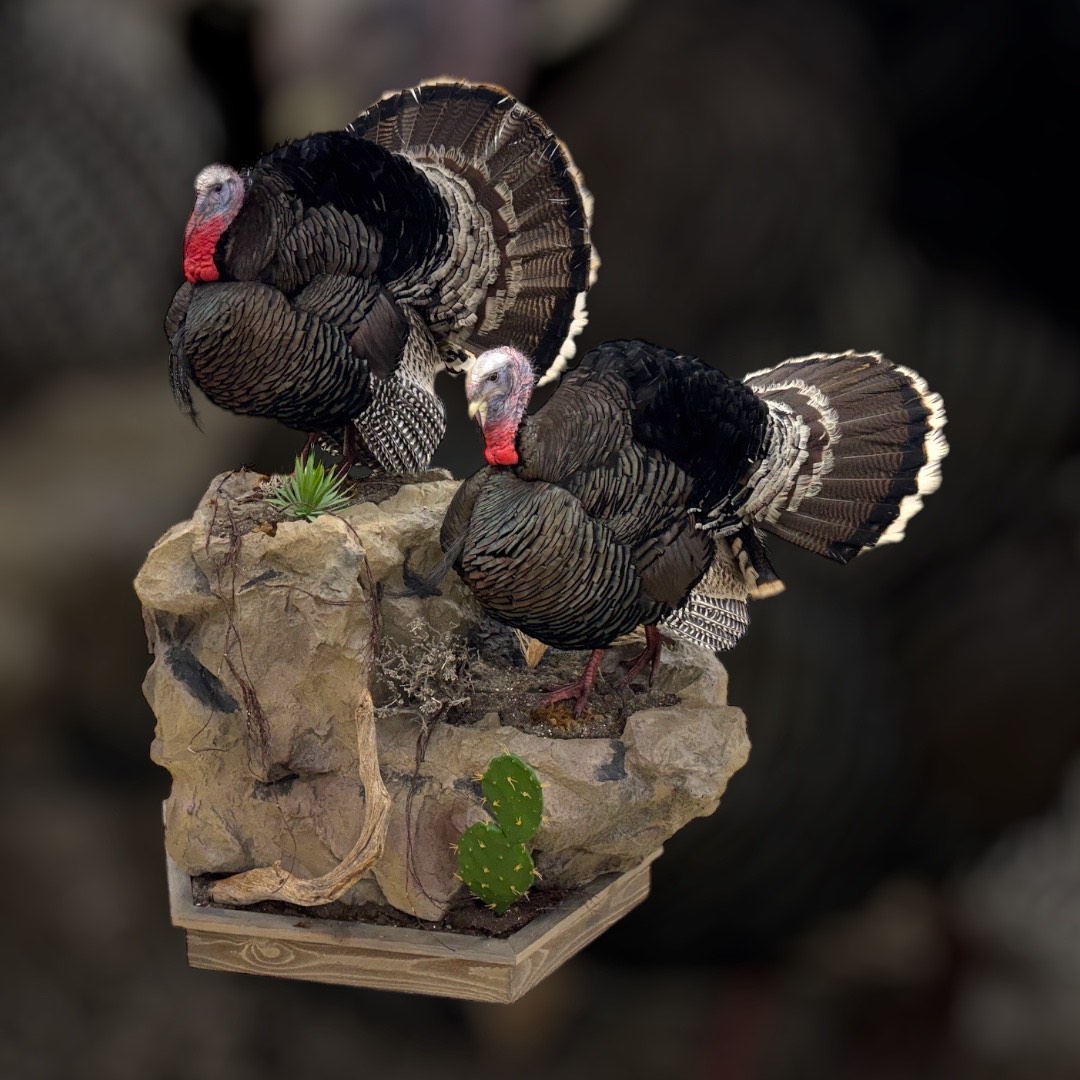
| Best Mount Poses | Full strut, half strut, flying | Standing or walking (limited pose options) |
| Overall Recommendation | Strongly recommended | Situational |
Feather Quality Differences
Spring turkeys have completed their annual feather growth, resulting in strong,
uniform feathers with full color and structure. This allows for cleaner mounting,
better symmetry, and more pose options.
Fall turkeys may still be molting or regrowing feathers. These feathers can be fragile,
uneven, or missing entirely, which can limit pose options and affect the final appearance.
What Are Pin Feathers?
Pin feathers are new feathers that have not fully developed. They appear as short,
stiff quills and are commonly found on fall turkeys.
Pin feathers cannot be replaced or “fixed” during the taxidermy process. If a bird has
extensive pin feathering, the final mount may show gaps, uneven texture, or limited
feather coverage.
Mount Success Rate
Spring turkeys offer the highest mount success rate due to feather maturity and overall
condition. These birds are ideal for full strut and other dynamic poses.
Fall turkey mount success varies widely. Some early-fall birds may be mountable, while
others may not be suitable for full-body mounts at all.
Our Recommendation
If your goal is a high-quality, long-lasting turkey mount, spring turkeys are
strongly recommended. Fall turkeys should be evaluated individually and may
be better suited for partial displays such as tail and beard mounts.