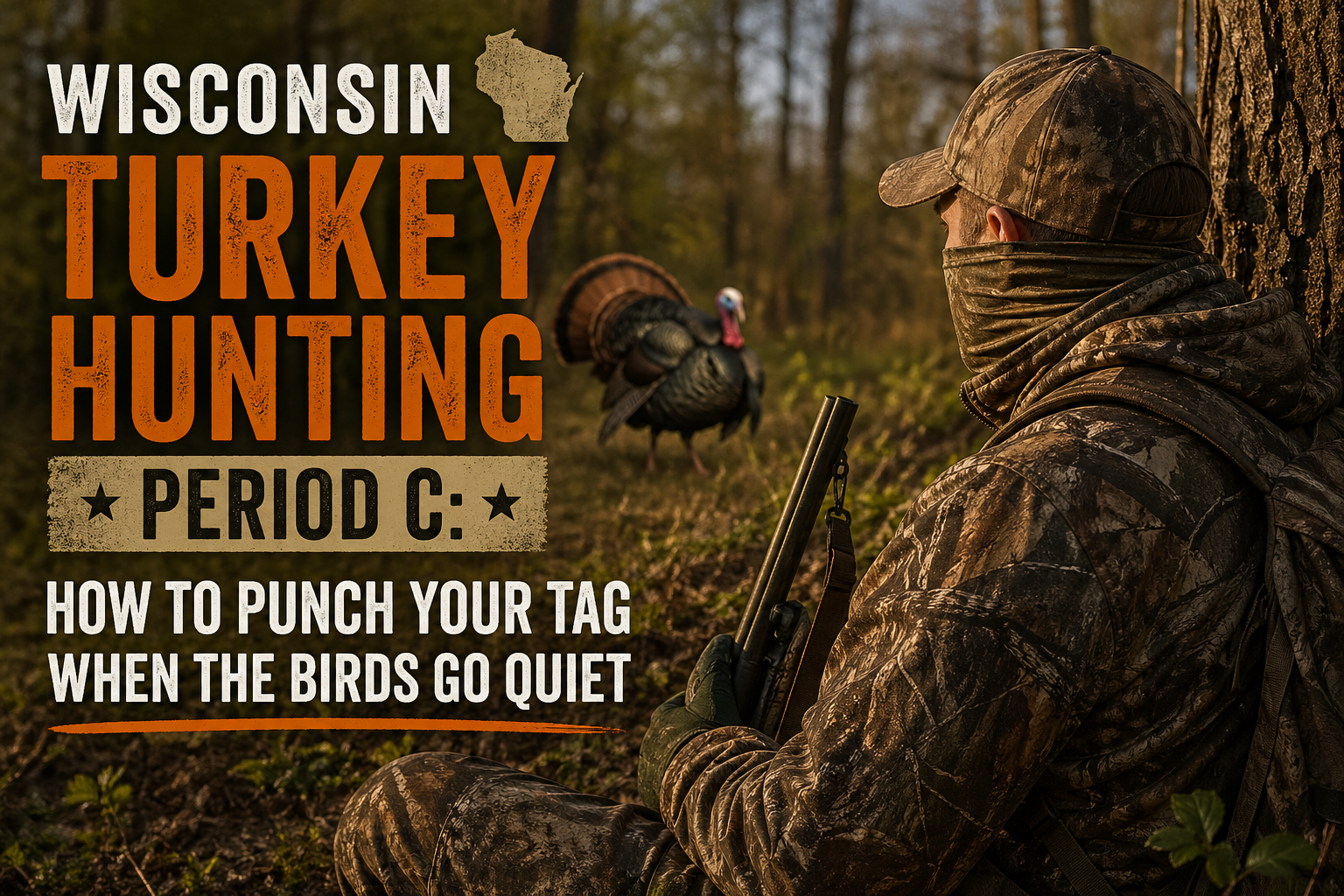
By the time Wisconsin’s third turkey hunting period rolls around, opening-week magic is gone. The big toms have heard a thousand calls, hens are slipping off to nest, and the woods that were thunderous on Day One feel almost eerie. Most hunters tag out in Periods A and B — or pack it in by Period C, convinced the birds won’t cooperate.
That’s a mistake. Period C in Wisconsin is one of the most underrated weeks of the entire spring. The pressure thins out, hens leave dominant gobblers alone for hours at a time, and toms that survived the first half of the season get lonely fast. If you change your tactics to match the moment, you can absolutely punch your tag — sometimes on a bird that wouldn’t even break strut for anyone else two weeks earlier.
Here’s how to hunt Wisconsin turkey hunting Period C the right way.
What Makes Period C Different
Period C is the third 7-day window of Wisconsin’s spring season. By that point, three things have changed in the woods:
- Hens are nesting. Once a hen sits on her clutch, she’s gone for most of the day. The dominant tom she was glued to suddenly has nothing to do.
- Birds have been educated. Two full periods of pressure means gobblers know what a yelp from a strange “hen” sounds like — especially on public land.
- Habitat is greening up. Insects hatch, fields turn green, and turkeys shift their feeding patterns toward bugs and tender shoots in open ground.
If you’re still hunting like it’s opening day — heavy calling at fly-down, sitting in your blind until 9 AM and going home — you’re missing the whole story.
The Mid-Morning Window Is Your Best Friend
This is the single biggest tactical shift for Period C: the prime time stops being dawn.
In Periods A and B, fly-down at 5:30 AM is electric. In Period C, that same fly-down is often dead silent — because the dominant tom flies down with hens, breeds, and goes quiet. He doesn’t need to gobble. He doesn’t need to look for company.
The action picks up between 9 AM and noon, when those hens peel off to lay eggs and that tom suddenly realizes he’s alone. He’ll start looking and he’ll start gobbling — sometimes loudly, sometimes just spitting and drumming as he cruises a strut zone. Hunters who sleep in until 8, grab coffee, and roll into the woods for the late-morning push tag more Period C birds than the dawn diehards.
Wisconsin’s regulations let you hunt until sunset during the spring season, so the afternoon hours from roughly 2 PM until quitting time also produce — especially on quiet, warm days when toms cruise toward roost areas and pick fights.
Calling Adjustments: Less Is More
Pressured Period C gobblers have heard every box call, slate, and mouth call in the catalog. The hunters who keep hammering soft yelps every 15 minutes don’t realize they’re advertising “human” louder than any spook flag.
Here’s how to dial it back:
- Start quiet. A few soft tree yelps and a couple of clucks at fly-down. That’s it. No cutting, no aggressive fly-down cackles unless you’ve already located a hot bird.
- Space your calls out. Every 20–30 minutes, not every 5. Let the woods settle.
- Use realism over volume. Soft purrs, contented clucks, and the occasional single yelp imitate a hen who’s content and feeding alone — exactly the bird a lonely tom is hoping to find.
- Know when to shut up. Once a tom answers and is moving, stop calling. Let him hunt for you. Pressured Period C toms hang up at 60 yards if you keep yelping; they’ll close that gap in silence if you go cold.
One more trick: if you’re working a bird that won’t commit, add a second hen sound from a different position — a friend or a remote call placed 40 yards away. The illusion of two hens together is enough to crack a hung-up gobbler more often than you’d think.
Run-and-Gun vs. Ambush: Pick the Right Tool
Period C tactics split cleanly into two camps. Both work — what matters is matching the tool to the terrain.
Run-and-gun is your best bet on bigger public land tracts and pressured private ground where birds have stopped responding to calls. Cover ground. Locate gobbles with a crow or owl call, close the distance fast, set up tight (within 100 yards if you can), and call sparingly. The goal is to find a bird that’s already in the mood and finish him in under 20 minutes — before he loses interest.
Ambush is the play on smaller properties and on fields where you’ve patterned strutting toms in Periods A and B. Find the strut zone, the dusting bowl, or the field corner he’s been working, set up a hen and jake decoy combo before first light, and just be patient. A henned-up Period C tom may not gobble all morning, but if you’re sitting where he wants to go anyway, he’ll show up. Put your back against a tree wide enough to hide your shoulders, get comfortable, and outlast him.
Most successful Period C hunters do both — run-and-gun until 10 AM, then settle into an ambush spot for the late-morning push.
Reading Sign in Week Three
By Period C, the sign in the woods tells a clearer story than gobbles do. Slow down and look:
- Fresh strut marks — those parallel drag lines from a tom’s wingtips in soft dirt or a sandy two-track. Fresh marks mean he’s still using that travel route.
- Dusting bowls — saucer-sized depressions in dry dirt where turkeys clean their feathers. Active bowls have fresh feathers and pellet-shaped droppings nearby.
- J-shaped droppings with a white cap — that’s a tom. Round droppings are hens. If you’re finding both, you’ve got a flock that’s still hanging together.
- Loafing cover — Period C toms spend midday in shaded edge cover, often on north-facing slopes or in cedar pockets. Find these spots and you’ve found where to ambush at lunchtime.
Cross-reference the sign with the time of day you find it fresh. If a strut zone has new marks at 11 AM, that’s a midday spot. If droppings are warm at first light, it’s a roost-area travel corridor.
Embrace the Bad Weather
Most hunters stay home when Period C delivers a cold front, drizzle, or steady wind. That’s a gift. Here’s why bad weather is good for you in week three:
- Cold fronts push hens to brood early in the morning, which means toms get lonely faster. The day after a front blows through is often the single best Period C day.
- Light rain moves turkeys to fields where they can see and hear better. A misty field edge at 10 AM is a money setup.
- Wind works for you on approach — birds can’t hear footfalls, and you can close the gap on a gobbler that would otherwise spot you in calm conditions. Hunt the lee sides of ridges where birds tuck out of the breeze.
The flip side: bluebird, 75-degree afternoons in Period C are often dead. Save your energy for the weather days other hunters skip.
After the Shot: Don’t Ruin Your Mount
Period C birds are mature, fully-feathered, and at peak plumage — exactly the kind of bird you want on the wall. But late-spring temps mean field care matters more than it did opening week. A few rules:
- Don’t sling him over your shoulder by the legs and walk a mile in 70-degree sun. Heat ruins skin and feathers fast.
- Keep him cool, keep him dry, and don’t gut him if you’re planning a mount.
- Get him to the freezer or to your taxidermist same day if at all possible.
For the full walkthrough, see our Turkey Field Care Guide. If you’re already thinking about how you want him posed, browse the latest turkey mounts coming out of our studio for inspiration — full-strut gobblers, flying poses, and dead-mount displays included.
Once you’ve got your bird in the freezer, get him to one of our two Wisconsin shops. Drop-offs at Jefferson are easy for southern Wisconsin hunters; Green Bay works for the Fox Valley and northeast crowd. Reserve early — Period C birds tend to all hit the door at the same time.
Frequently Asked Questions
Is Period C worth hunting in Wisconsin?
Yes — arguably more than Period B for hunters who like solitude and lonely toms. Pressure drops sharply, hens nest, and dominant gobblers get vulnerable in the mid-morning hours. Public land especially opens up.
Are turkeys quiet in Period C?
At fly-down, often yes. By 9–11 AM, no. The henned-up tom that didn’t gobble at dawn frequently goes vocal once his hens leave to lay eggs. Plan your day around that window.
What’s the best time of day to hunt Period C?
9 AM to noon for most days, with a secondary window from about 2 PM until sunset. Skip the dawn-only mindset — you’ll miss the actual action.
Should I use decoys in Period C?
It depends on pressure. On lightly-pressured private land, a hen-and-jake combo still works. On heavily-pressured public land, a single feeding hen often pulls in mature toms that would flare from a jake. When in doubt, run minimal decoys or none.
How does Period C tie into the rest of the Wisconsin season?
It’s the transition week between early-season aggression and late-season recovery. For full season dates and zone breakdowns, see our Wisconsin Turkey Season 2026 guide.
Bottom Line
Period C rewards the hunter who slows down, listens harder, and trusts that the woods aren’t dead — they’re just quieter. Hunt the mid-morning window, dial back your calling, read the sign in front of you, and embrace the weather everybody else avoids. Bring home a mature Wisconsin tom, take care of him in the field, and let our team turn him into a mount you’ll still be proud of in twenty years.
Ready to plan your mount? Learn more about our turkey taxidermy options or take a look at our full-strut gallery for inspiration before your bird comes off the freezer shelf.